We are, we like to think, careful about words. We spend a long time on our essays. We fuss over the fonts, the reading column, the colour of a link. So it was a useful kind of humbling to spend two days in a room run by Atma and a team of digital-marketing professionals, and to watch our beautiful website quietly fail a test we hadn’t thought to give it.
The workshop was about SEO — search engine optimisation — but the framing that stayed with us wasn’t technical at all. It was four plain verbs. A good website, they said, helps the people who need you be found, be understood, be trusted, and be supported. We went home, held our own site up against those four words, and then rebuilt it. Here is the honest before-and-after.
The moment the four verbs went up on the screen, I had my aha. I knew, right then, that this workshop wasn’t going to be about tweaking meta tags — it was going to help us redesign the architecture of the website itself.
One of their homework questions did the same thing for our planning: which audience matters most to your NGO this year? Sitting with that, my partner and I got clear that our focus this year is social-sector leaders — and that clarity has since shaped how we spend our next few weeks and our limited resources. It also exposed something about our old navigation: menu items like The Inquiry, What We Believe, and Alternative Learning were true to us, but they gave a first-time visitor nowhere familiar to go.
Be found
We write a great deal, and search engines had noticed the writing. But if you were a parent typing “reading club for children in Chennai,” or a CSR team searching “education NGO partner Tamil Nadu,” or someone who simply wanted to “donate to a children’s education non-profit” — you would not have found us, because we hadn’t written a single page in the words those people actually type. We built a library and forgot to put up a sign anyone was searching for.
Now: every audience has a plain-language door — For Individuals, For Organisations, For Families — written in the words people use.
Be understood
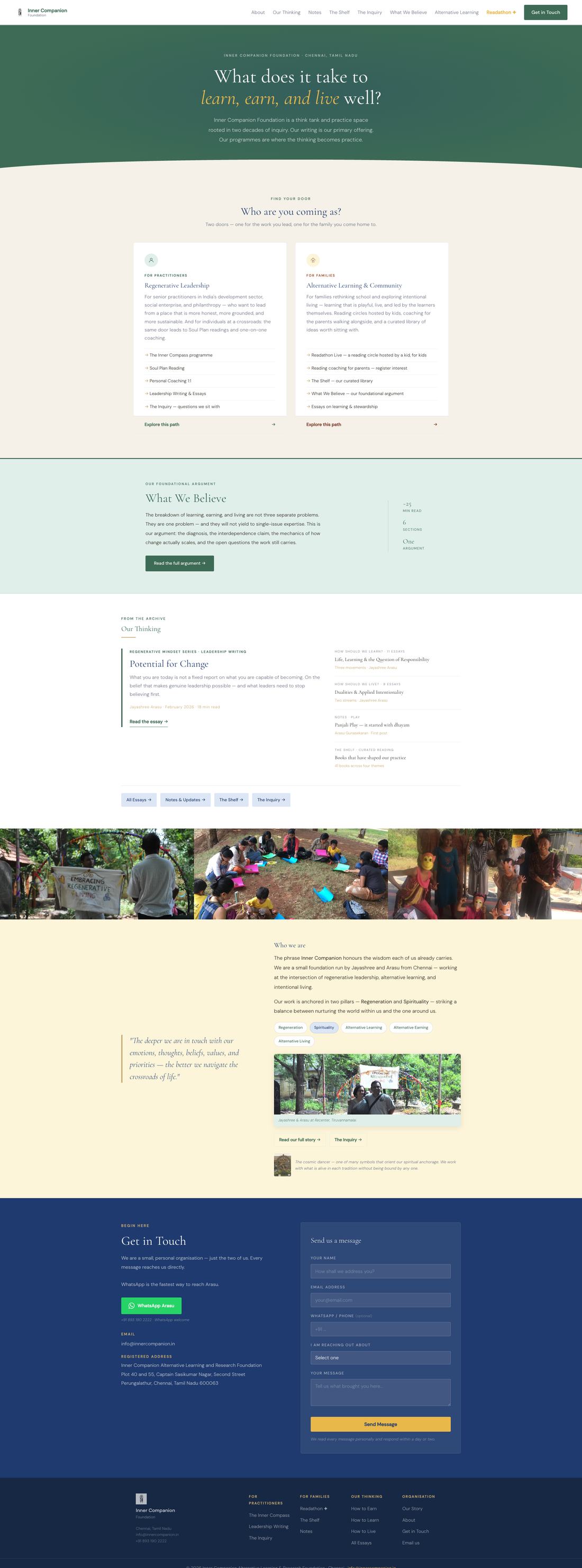
Our old homepage opened with a philosophical question. It’s a good question — but a poor first impression for someone with ten seconds and a specific need. A first-time visitor should be able to tell, almost instantly, what we do, who we help, and where.
Before → After: [the old homepage] (above) → the plain-spoken, mobile-first homepage today.
Writing that plain headline turned into one of the most useful conversations my partner and I have had about the work. Saying what we do in ordinary words — for a stranger, in ten seconds — is hard when you love the nuance. But that same conversation handed us our elevator pitch, almost for free.
Be trusted
We had some of the pieces — two decades of work, our registrations, our founders’ names. What we hadn’t done was put the plain trust signals where a cautious donor or a diligent CSR officer looks for them: our Section 8 status and CIN, an impact page with real figures, where we work.
Now: a trust band on the homepage, an Impact page, and a Where We Work page.
Be supported
This was the sharpest one. If someone finished reading, felt moved, and wanted to help — donate, volunteer, partner — there was, on our old site, almost nowhere for them to go.
Now: clear next steps — Support, Volunteer, and Work With Us / CSR.
A few more, before and after
| Page | Before | After (live) |
|---|---|---|
| Essays | 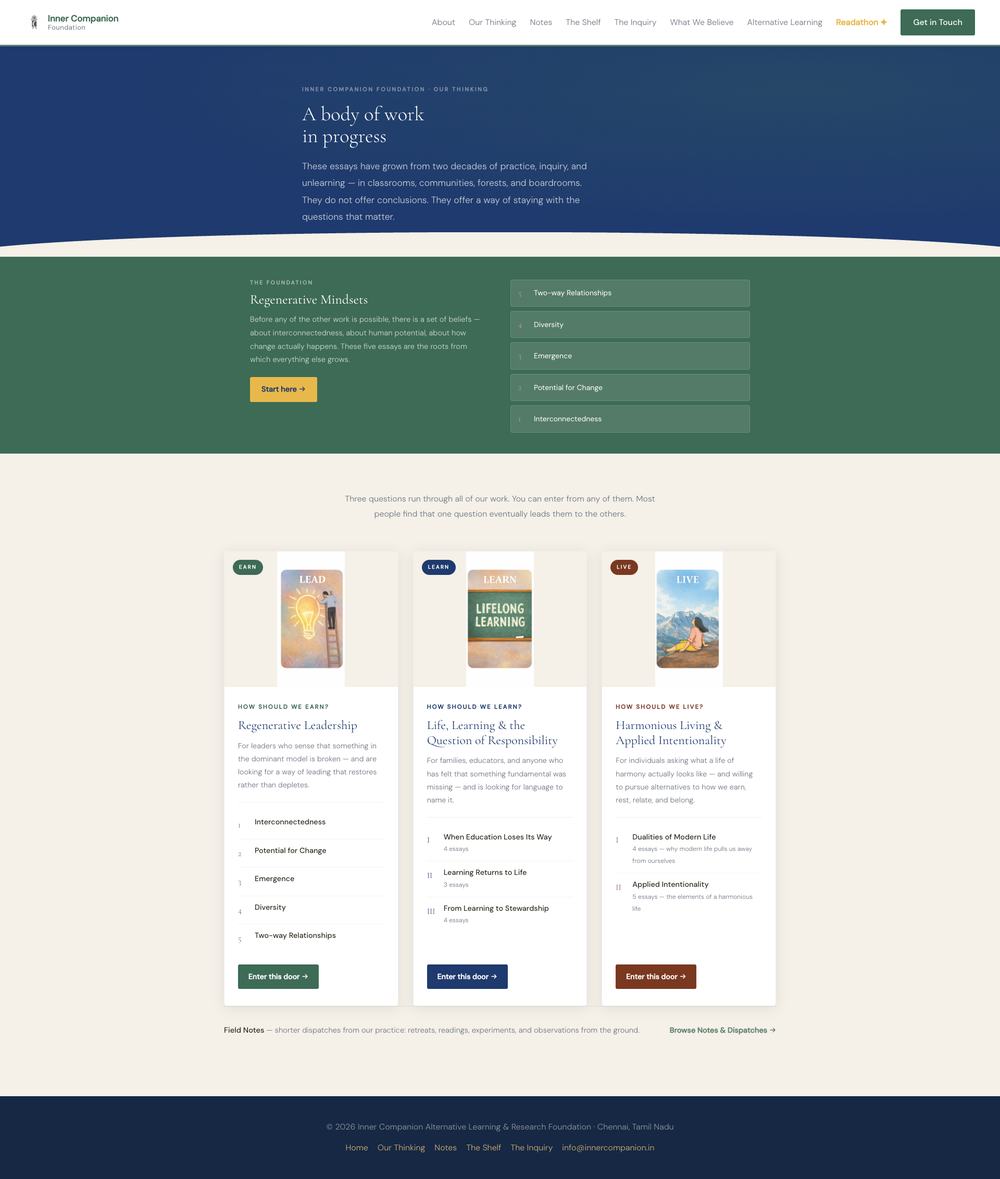 |
Thinking → |
| Readathon | 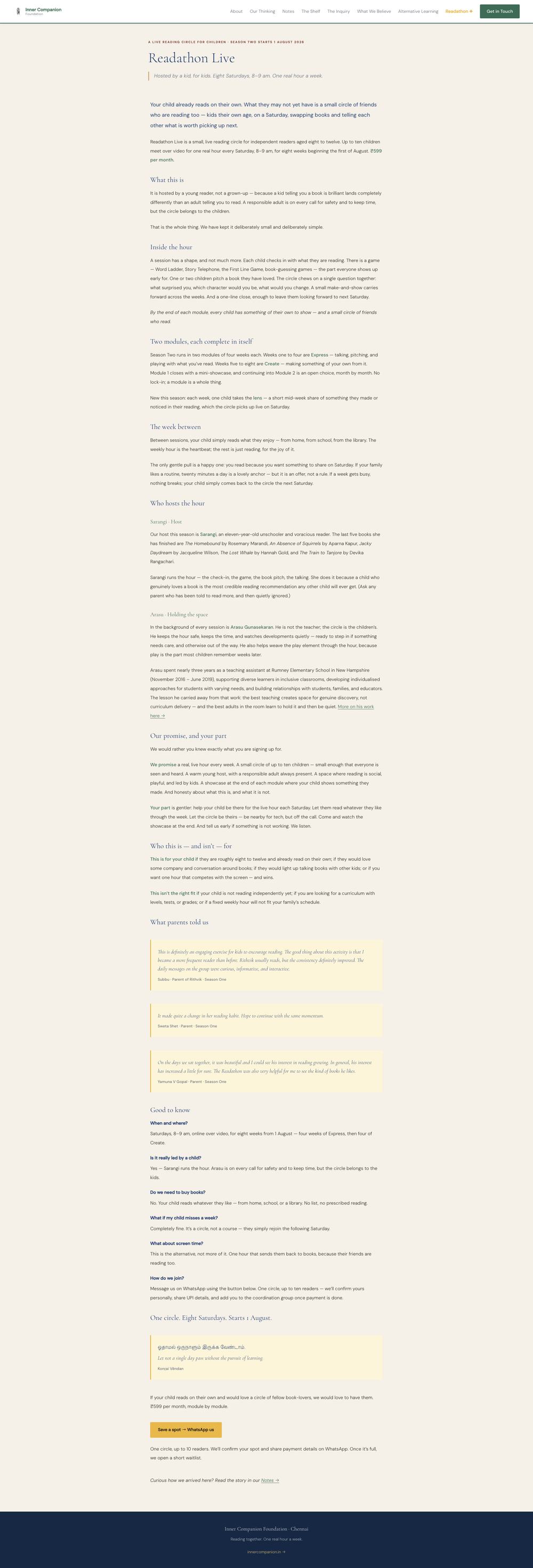 |
Readathon → |
| Families | 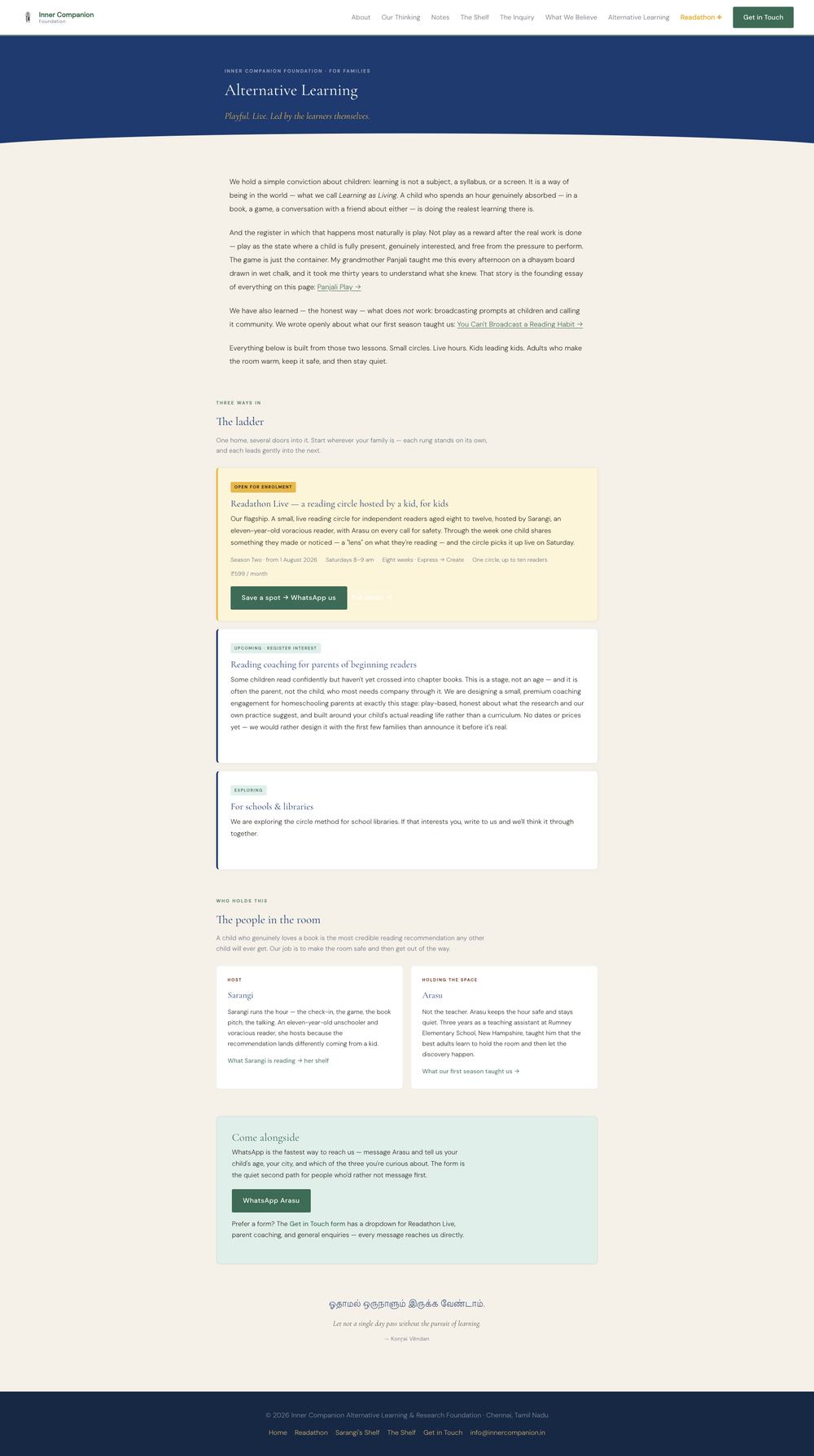 |
For Families → |
What we changed, in short
We added the pages we were missing, rewrote the homepage so the plain thing comes first and the philosophy comes second, used the words our neighbours actually use, and did it in our own voice — honest, unhurried, prices stated, no jargon. Clearer is not the same as louder.
What surprised us most: no matter how unique your organisation is, it pays to follow the basics and keep it simple. Your creativity and distinctiveness belong in your programmes — not in reinventing what a website is supposed to do.
Thank you, Atma
None of this would have been so clear so quickly without the workshop. The SEO sessions were led by Rajesh Jujare and Ankit Mishra of EY, with the Atma team represented by Kanika Arora, who held the space with real care. The part that landed hardest was their live technical audit of a few participants’ own websites, done in real time — nothing drives home what those first ten seconds mean to a visitor like watching your own homepage judged, gently, by a stranger.
A genuine thank-you to all of them — for the framework, the patience, and the useful discomfort of seeing our own work through fresh eyes. If you’re a small NGO, their webinars are worth your time.
NGOs help each other. This one helped us — and we’re glad to pass the lesson on.
— Arasu, Inner Companion Foundation